The Art of War Summary: Win at Work Without Fighting
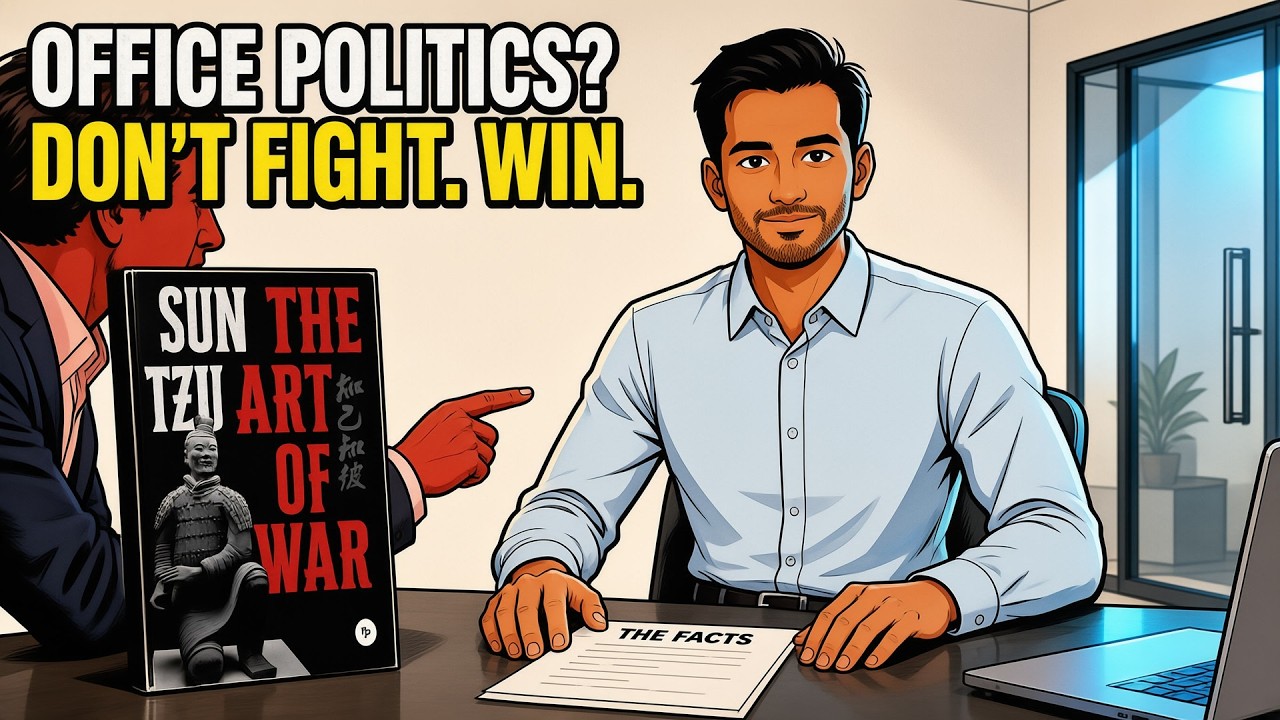
Prefer to watch? Open the animated summary on YouTube.
In one lineThe best victory is the fight you never have: stay calm, know yourself and the other side, prepare early, and leave your rival a way out.
Key lessons
- The highest skill is to win without a fight, and to keep the other side whole.
- Never fight out of anger. Anger passes, but some damage cannot be undone.
- Do not swallow the bait. A hot temper and delicate pride make a leader easy to beat.
- Know yourself and know the other side. Knowing only yourself gives you a defeat for each win.
- Choose the ground: decide where and when a hard conversation happens.
- Prepare so well that the meeting is a formality. Winners win before the battle starts.
- Leave the other side an outlet, so a cornered rival does not fight to the end.
On this page (8 sections)
It is midnight. An email blames your team, and it is copied to half the office. Your reply is already typed. If you send it, you may feel strong for an hour. If you stay silent, you may feel beaten for a week.
The Art of War by Sun Tzu offers a third path. This old Chinese book says the best general does not win by fighting every battle. He wins by making the battle unnecessary.
What is The Art of War about?
The Art of War is a short book on strategy, traditionally credited to Sun Tzu, which means “Master Sun.” Historians are not sure who he was, or if he lived. The text is old. In 1972, workers in eastern China found copies written on bamboo strips in tombs sealed more than two thousand years ago. The English version most Indian readers know is by Lionel Giles, from 1910.
The book is about war between kingdoms. But its ideas carry over to any contest, including a tense workplace. Its central idea is that the highest skill is to break the other side’s resistance without fighting. In Giles’s wording: “supreme excellence consists in breaking the enemy’s resistance without fighting.”
This does not mean giving in. You still prevail. You do so without burning the ground you must work on tomorrow.
Why fighting back costs more than it seems
Sun Tzu ranks ways of dealing with an opponent. Best of all is to spoil the plan before it hardens. Next is to break up the other side’s alliances. Next is to meet them in the field. Worst of all is to attack a walled city.
At work, you can read this as a ladder. First, change a bad plan before it settles. Then win over the people it affects. Then argue in the open. A public reply to everyone is the siege, and it comes last, if at all.
Take a product lead in Pune, whose sales colleague promised a client a feature without asking. If the product lead replies to all, the two teams stop talking. The director is annoyed with both. The client is still waiting. The fight cost more than the problem.
Why anger is not strength
The book lists five faults that ruin a general: recklessness, cowardice, a hot temper, delicate pride, and over-worry about your people. A hot temper and delicate pride are easy to use against someone. A rival only needs to insult you.
Sun Tzu also says no general should fight from anger. Anger can turn back into gladness. A destroyed kingdom cannot come back. In an office, the sharp email cannot be unsent. The feeling fades by morning. The damage may not.
A later commentator tells of a duke who wanted to charge when the enemy’s drums began. His adviser told him to wait until the third drum roll, when the enemy’s spirit was gone. Calm timing beat speed.
Why you must know both sides
Sun Tzu’s best-known line says that if you know yourself and the enemy, you need not fear a hundred battles. If you know only yourself, you will lose as often as you win. If you know neither, you will lose every time.
Most of us enter a meeting knowing our own side perfectly and the other side barely. Ask what your rival needs: a target they may miss, a client they have over-promised, a boss who is pressing them. You may see a person under pressure, not a villain.
Sun Tzu also teaches you to read signs. Humble words with busy preparations may mean an attack is coming. A sudden show of friendliness is worth a closer look.
Why preparation decides the meeting
The book says the general who wins makes many calculations before the battle. The general who loses makes few. It also says the winner fights only after the victory is secured, and the loser fights first and hopes for victory afterwards.
Before a meeting that matters, use five checks. Know yourself. Know what the other side needs. Choose the ground. Make your facts impossible to dispute, with dates and emails on one page. Plan a dignified way out for the other side.
Why you should leave a way out
Sun Tzu writes that when you surround an army, you should leave an outlet. A desperate enemy fights to the end. In an office, this means not using every piece of proof just because you hold it. Let the other person keep their dignity, and they have less reason to fight on.
The book ends its lessons with a story from translator Thomas Cleary’s edition. A lord asks a physician which of three brothers is the best healer. The eldest stops illness before it takes shape, so nobody knows his name. The physician himself is the least skilled, and the most famous.
How to use this at work and at home
- Never reply to an angry message at once. Save the draft, and wait until the morning.
- Write one line to the person alone: “Can we talk before the review?”
- Make a one-page record of dates, decisions and emails.
- Write down what the other person needs.
- When you win, share the credit and leave them a way to save face.
Our take
The strongest part of this book is its calm. It turns a hot situation into a plan, and it favours patience over display. The advice to prepare early and to choose the time and place of a hard talk is useful in any job.
There are weak points. Sun Tzu wrote about deception in war, and some lines do not suit a workplace where trust matters. The book is short and general. It gives principles, not scripts. Many of the best-known stories come from later commentators, not Sun Tzu himself. And avoiding a fight is not always right. If someone is harming you or your team, you may need to speak up openly or go to HR.
Used with care, it is a good guide to staying calm when others are not.
The animated summary walks through each idea with a story from a Pune software team. It takes about 20 minutes.
Who should read The Art of War?
Professionals caught in blame emails, turf wars or tense meetings who want to protect their team without becoming the bad guy.
Watch the full animated summary
Every idea from The Art of War, told as a story in about 20 minutes.
As an Amazon Associate, we earn from qualifying purchases.


