
The Psychology of Money Summary: Why Behaviour Beats Brains
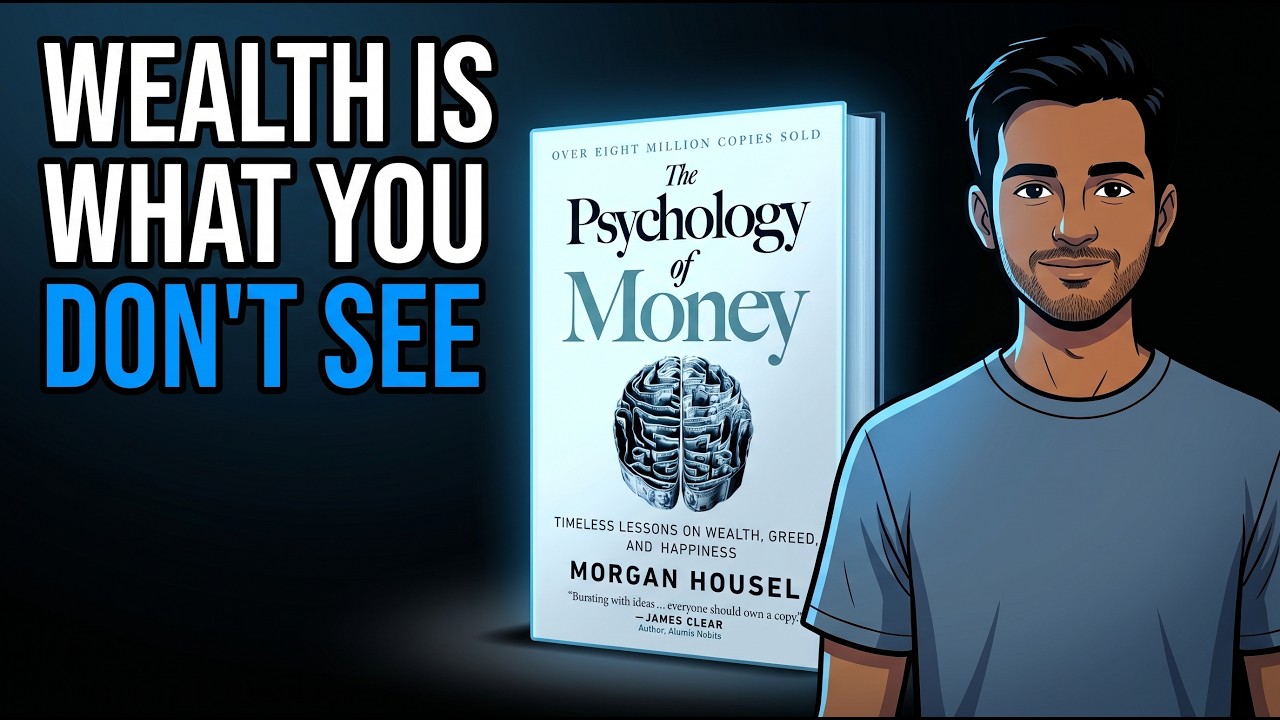
Prefer to watch? Open the animated summary on YouTube.
In one lineGood money results come from patient, humble behaviour you can keep for decades, not from high intelligence or clever tricks.
Key lessons
- Nobody is crazy about money. People act on the life they have lived.
- Luck and risk shape every big success and every big failure, so stay humble.
- Decide what 'enough' means for you, or your spending will rise with your income forever.
- Staying wealthy needs different skills from getting wealthy: caution and room for error.
- Let compounding work. Good returns held for a very long time beat a perfect trade.
- Real wealth is what you do not see: savings, options and control over your time.
- Choose a plan that is reasonable and lets you sleep, not one that is only perfect on paper.
On this page (10 sections)
- What is The Psychology of Money about?
- Why no one is crazy about money
- Luck, risk and staying humble
- Why “enough” is the hardest skill
- Getting wealthy is not the same as staying wealthy
- The quiet power of compounding
- Real wealth is what you do not see
- Why “reasonable” beats “perfectly rational”
- How to use this at work and at home
- Our take
Your salary goes up. You buy a better phone, move to a bigger flat, and eat out more often. Yet one surprise bill, such as a hospital visit or a car repair, still makes everything feel shaky. Many working people live like this, and they often think the answer is a higher income or more financial knowledge.
The Psychology of Money says the problem is somewhere else. It is not about intelligence or information. It is about how we behave, what we expect, and how much we want to impress other people.
What is The Psychology of Money about?
Morgan Housel wrote the book in 2020. He worked as a financial writer, and he has spent years watching how people make money decisions. The book has short chapters. Each one is a lesson about how humans really think about money, not how a textbook says they should.
The central idea is simple. Doing well with money is not mainly a skill of maths. It is a skill of behaviour. A person with average knowledge and calm habits can beat a clever person who panics, boasts or gets greedy.
This matters now because we see other people’s spending all day on our phones. That makes it very easy to measure ourselves against the wrong people.
Why no one is crazy about money
Housel starts with a kind idea: no one is crazy with money. What looks foolish to you may be sensible to someone else, once you know their story.
Think of two colleagues. One grew up watching his parents lose their savings in a market fall. The other grew up in a family that grew rich from shares. When the market drops, they feel very different things. Neither is stupid. Each is reacting to the life they have lived.
So do not judge people harshly for their money choices. Also, do not copy a famous investor step by step. Their path was shaped by timing and luck that you cannot repeat.
Luck, risk and staying humble
The same forces can lift one person and break another, even when both worked hard. Luck and risk are real, and they are hard to see from outside.
This leads to humility. When you see a huge success, do not assume it was all skill. When you see a failure, do not assume it was all laziness. Look for patterns that repeat across many people, such as patience and avoiding ruin. Those are more useful than one dramatic story.
Why “enough” is the hardest skill
Housel calls learning to say “enough” the hardest money skill. Modern life is very good at making wealth, and even better at making envy.
Here is how it happens. You get a raise of ₹10,000 a month. Soon you upgrade your phone, then your flat, then your holiday plans. Your income went up, but your savings did not. If your wants grow as fast as your pay, you will never feel you have enough.
The book also points out that most people are not watching you. Your neighbour sees your new car for a few seconds, then goes back to his own worries. But you pay the EMI every month.
So the shift is this: stop spending to show status. Start using money to buy freedom.
Getting wealthy is not the same as staying wealthy
To get wealthy, you often need optimism and a willingness to take risks. To stay wealthy, you need almost the opposite: thrift, worry and respect for what can go wrong.
Housel says survival is the most important money skill. If you avoid a huge loss and stay in the game, time can do a lot of work for you. That is why he stresses room for error. You cannot predict a job loss, an illness or a recession. So you keep savings, you use cautious assumptions, and you do not build a life that only works if everything goes right.
The quiet power of compounding
Compounding means your gains earn their own gains over time. The book shows that great results often come from good returns held for a very long time, not from the single best return.
Housel uses Warren Buffett as the example. Most of Buffett’s wealth came late in his life, because he started early and stayed invested for decades. The maths is easy. The hard part is waiting while markets rise and fall.
This is why he suggests simple, low-cost, broad investing, and then leaving it alone. You do not need the perfect stock. You need a plan you can follow for a very long time.
Real wealth is what you do not see
A car or a luxury holiday tells you how much someone spent. It does not tell you how much they own. Real wealth is often invisible: an emergency fund, investments that keep growing, and the freedom to leave a bad job without panic.
Housel says the highest return on money is control over your own time. He also says to save even without a clear goal. Cash gives you flexibility. It turns a crisis into a small setback, and it lets you grab a good chance when others have no spare money.
Why “reasonable” beats “perfectly rational”
Finance classes assume people are robots. Real people have families, fears and pressure from relatives. A plan that is perfect on paper but too stressful to follow will fail. A plan that is a little less efficient but lets you sleep well will usually win over decades.
How to use this at work and at home
- Write down your “enough”. Describe a good life in plain details: where you live, how much free time you want, and how much work pressure you accept. Use it to check if a risk or purchase serves you or only impresses others.
- Keep a gap between earning and spending. Make sure your fixed costs sit clearly below your income. When a raise comes, save a fixed share of it before your lifestyle grows.
- Build room for error. Aim for an emergency fund that can carry you through a job loss or a medical bill, so you are never forced into a bad decision.
- Invest simply and for decades. Put regular amounts into broad, low-cost funds. Then focus on your career and skills, not on the news.
- Treat each extra purchase as a trade. You are choosing between more things today and more control over your time later.
Our take
The strongest part of this book is its tone. Housel does not talk down to readers. He accepts that people are emotional, and he builds advice around that fact. The ideas on “enough” and invisible wealth are useful for anyone, at any income level.
The book has limits. It is a set of essays, not a step-by-step system, so you must turn the ideas into your own plan. Some examples come from the United States and from very rich people, and they do not map neatly onto an Indian family with loans, dependants and uneven income. The advice to “save without a goal” is also easier when you already earn enough to save. If your income barely covers the month, your first job is to raise it or cut costs, not to compound.
Even so, the core lesson holds up. Good money habits that you can keep for a long time beat clever moves that you cannot.
The animated summary walks through each idea with stories and examples. It takes about 11 minutes.
Who should read The Psychology of Money?
Anyone whose income has grown but whose money stress has not gone down, and anyone who wants a calm, simple way to save and invest.
Watch the full animated summary
Every idea from The Psychology of Money, told as a story in about 11 minutes.
As an Amazon Associate, we earn from qualifying purchases.


