The Let Them Theory Summary: Stop Trying to Control Others
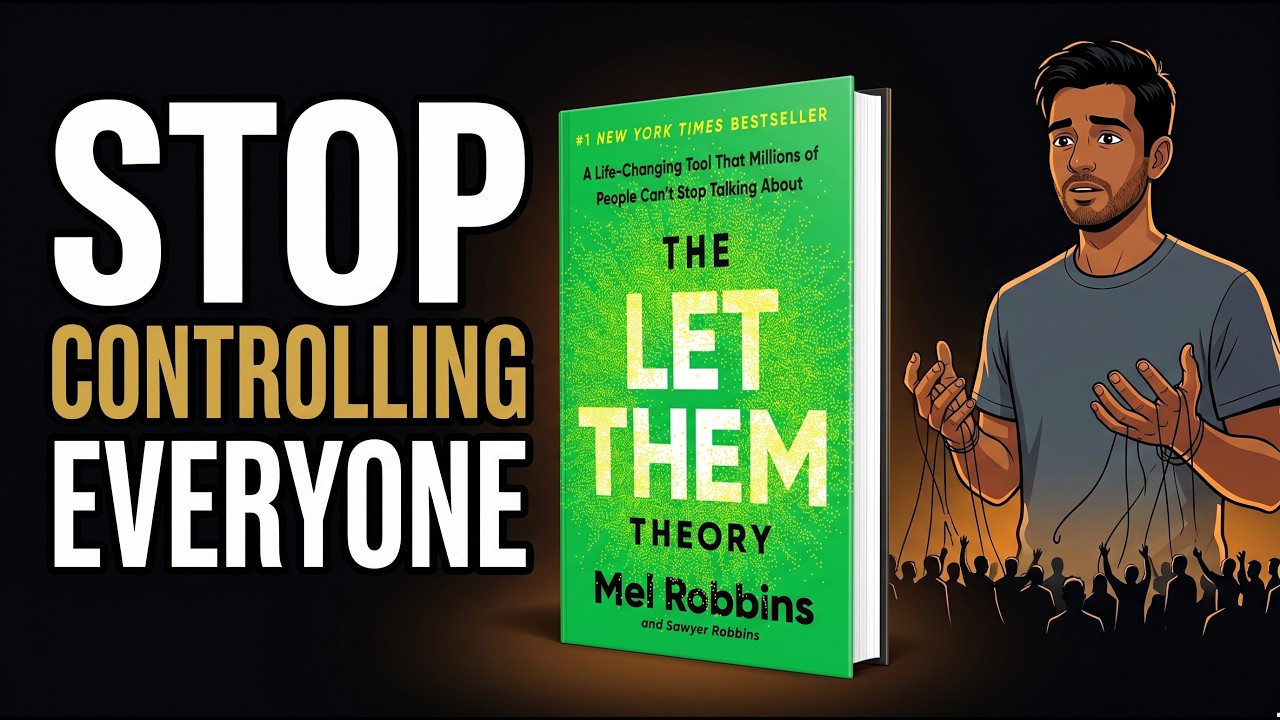
Prefer to watch? Open the animated summary on YouTube.
In one lineLet other people think and do what they choose, then use your energy to decide how you will respond and live.
Key lessons
- A lot of stress comes from trying to control what other people think, feel and do.
- When someone behaves in a way you dislike, say to yourself: let them.
- Letting them does not mean you accept mistreatment. It means you stop fighting what you cannot control.
- Then say: let me. Decide your own response, boundaries and next step.
- Other people's opinion of you is their business, not yours.
- The same two steps work with friends, family, colleagues and comparison.
- The energy you save can go to your own goals and wellbeing.
On this page (8 sections)
Think about how much of your day goes into other people. You wonder why a friend has not replied. You try to get a colleague to work your way. You feel hurt when a relative does not approve of your choices. It is like a second job, and nobody pays you for it.
The Let Them Theory by Mel Robbins offers a simple way to put that job down. It uses two short phrases: “let them” and “let me”.
What is The Let Them Theory about?
Mel Robbins is an American author, speaker and podcast host. She is also known for her earlier book, The 5 Second Rule. She published The Let Them Theory in 2024.
The book starts from an everyday fact. We cannot control other people. We cannot make someone like us, agree with us, or behave the way we want. Yet we spend huge energy trying, and we end up tired and resentful.
Robbins’s answer has two parts. First, let them: stop fighting what you cannot control. Second, let me: take charge of the one thing you can control, which is yourself.
“Let them”: two words that loosen your grip
When someone does something that bothers you, your first instinct is to react. You argue, explain, or try to change their mind. Robbins suggests another response. Say to yourself, “Let them.”
Let them think what they think. Let them leave you out of a plan. Let them show you who they are. This is not approval, and it is not giving up your values. You are only dropping a fight you cannot win.
The phrase works because it is short and easy to use anywhere. You can say it in a meeting, on a phone call, or in a family argument. It takes a few seconds and calms the urge to control.
Why controlling others drains you
Robbins points out that much of our stress sits in the gap between what we want from others and what we can get. Your manager’s mood, your cousin’s choices, your neighbour’s comments are not in your power.
Take a common case. A friend does not invite you to a gathering. You may spend the evening replaying it and guessing why. The event has already happened. The only thing you control is what you do next.
When you notice this, you can stop pouring effort where nothing changes. That is not defeat. It is relief.
“Let me”: where your real power lives
Robbins insists on the second half. If you only say “let them”, you may slide into passivity or avoidance. “Let me” turns acceptance into action.
After you let a person be who they are, you decide how you will respond. What boundary will I set? What will I do next? Whom do I want to spend my time with?
For example, if a friend often cancels plans, you let them be unreliable. Then you let yourself stop waiting. You plan something else, and you spend more time with people who show up. You have not changed the friend. You have changed your own week.
Other people’s opinions are not your business
One of the biggest uses of the theory is opinion. We shape our behaviour around what others think. We worry about how a post will look, how a decision will sound to relatives, or what colleagues say behind our back.
Robbins says that what others think of you belongs to them. You cannot control it, and people will form views whatever you do. So let them think it. Then focus on living by your own values.
This can free you to take small risks, such as speaking up in a meeting or changing careers, without needing everyone to approve first.
Using it across your life
The theory fits almost everywhere. With friends, you let them drift instead of clinging. With family, you let adults make their own choices. When you compare yourself with others online, you let them have their good news. When you feel left out, you let them do their thing and focus on your own plans.
Robbins also notes that the saved energy matters. Every hour spent stewing over someone’s behaviour is an hour not spent on your own goals or health. “Let me” sends that time back to you.
How to use this at work and at home
- Pick one person or situation that drains you this week. Write it down.
- When it happens, say silently: “Let them.” Take one slow breath before you speak.
- Then ask: “What do I want to do about this?” This is your “let me” step.
- Set one clear boundary if needed, in calm words. For example, “I can finish this by Friday, not Wednesday.”
- Use the time you save for one thing that helps you, such as a walk, a skill or a call with a supportive friend.
Our take
The strongest part of this book is its simplicity. Two phrases are easy to remember, and they give you a quick pause in a tense moment. The “let me” half is what makes the idea useful, because it keeps the theory from becoming passive.
There are weak points. The idea is not new. Many older writers have taught the same split between what you control and what you do not. Some readers may take “let them” too far and ignore real problems in a relationship. Letting someone be themselves does not mean you must stay and be treated badly. In some situations, you need to speak up, set firm limits or leave. At work, you may still need to give feedback or manage people, and the theory does not cover that fully.
Used with care, it is a helpful reminder to keep your energy for what is yours.
The animated summary walks through each idea with stories. It takes about 13 minutes.
Who should read The Let Them Theory?
People who worry a lot about what others think, feel responsible for everyone's mood, or get drained by friends, family or colleagues who do not change.
Watch the full animated summary
Every idea from The Let Them Theory, told as a story in about 13 minutes.
As an Amazon Associate, we earn from qualifying purchases.