How to Talk to Anyone Summary: Simple Tricks to Connect
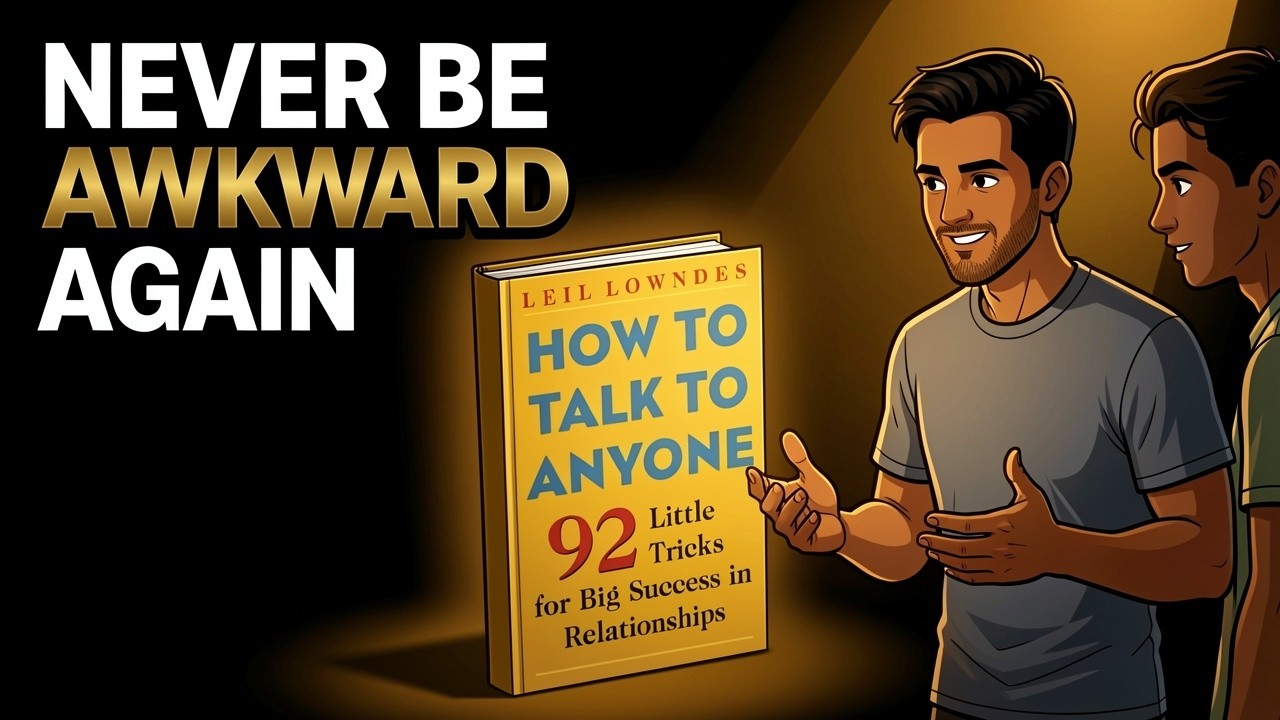
Prefer to watch? Open the animated summary on YouTube.
In one lineCharm is a set of small skills, such as warm body language, matching mood and real curiosity, that anyone can learn.
Key lessons
- Your body language speaks first, so smile slowly and give people your full attention.
- Hold eye contact gently and turn your whole body towards the person you meet.
- Read the other person's mood and match it before you start to talk.
- Your first words matter less than sounding warm. Use something unusual to start talk.
- Echo a person's own words to show you listened.
- Give specific, true compliments, ideally ones the person will hear through others.
- Real curiosity beats any technique. People notice when you fake it.
On this page (9 sections)
You walk into a networking event. The room is loud and everyone seems to know someone. You see a group laughing in the corner and want to join, but you worry you will say the wrong thing. So you stand alone and check your phone.
Now picture the same night with one change. Within minutes you are part of the group, and people lean in when you talk. The difference is not your job title or your looks. It is how you connect. How to Talk to Anyone by Leil Lowndes says that is a learnable skill.
What is How to Talk to Anyone about?
Leil Lowndes is an American communication coach who has taught executives and everyday people how to connect. She published the book in 2003. It is a toolkit of many short techniques, covering the first moment you see someone to the moment you say goodbye.
Her core claim is that charm is not something you are born with. It is a set of small skills. The book covers first impressions, conversation starters, body language and compliments. It aims to help you win people over without being manipulative.
Your body speaks first
Lowndes says people form a deep impression of you within seconds, and that impression comes mostly from body language. She quotes a figure of about 80 percent of a first impression, but treat that number with care. No one has a precise count. The point still holds: your posture, face and energy are the first things people notice.
She offers specific moves. The flooding smile is one of them. Most people flash a quick, automatic smile. Instead, pause for a second, look at the person, then let a warm smile spread slowly. That pause tells them the smile is meant for them.
She also describes three eye habits. Sticky eyes means holding gentle contact and looking away slowly. Epoxy eyes means keeping your gaze on the person you find most interesting in a group. The big baby pivot means turning your whole body towards someone you meet, as you would for a child tugging your sleeve.
Match the mood first
Before you speak, read the other person. Are they calm, excited or stressed? Match their energy before you try to change it. If they are quiet, do not bounce in with loud cheer.
Lowndes compares this to a mother comforting a crying baby. She does not tell the baby to stop. She matches the distress with soft, caring sounds, and then they calm down together. With adults, match first and then guide the talk gently.
Starting a conversation
Many people freeze, looking for the perfect opening line. Lowndes says your first words matter little. Sounding warm matters more.
She suggests the whatzit: carry or wear something unusual, such as a special pin or a book. It gives strangers a reason to ask about it. If you approach a group, try the eavesdrop-in. Stand near, listen, and join with a line like “Excuse me, I could not help overhearing.”
Echoing and speaking their language
Echoing means repeating a person’s key words back to them. If someone says, “I had an incredible experience at the conference,” reply, “An incredible experience? Tell me about it.” People feel heard when they hear their own words.
Lowndes also suggests using images from the other person’s world. With a gardener, talk about planting seeds. With a pilot, say an idea is “taking off”. These pictures land because they come from something the person loves.
Compliments that work
Lowndes names two kinds. Grapevine glory means praising someone to a friend so the praise reaches them later. It carries weight because you were not trying to win favour.
The killer compliment comes at the end of a talk. Look at the person, say their name and share one specific, honest quality. “Rahul, you have a way of making people feel at ease” works better than “You are great.”
Why these tricks work
Underneath each technique is a single idea. People like to feel seen, heard and safe. A slow smile, full attention and an echo of their words all send that message. The skills are different, but the goal is the same.
This also explains Lowndes’s warning. If you use a technique to get something from a person, they often feel it. If you use it to show that you care, it works better. A salesperson in Pune who truly wants to understand a client’s problem will use these skills more naturally than one who is only chasing a sale.
How to use this at work and at home
- Tomorrow, pause for one second before you smile at the first person you greet.
- In your next meeting, read the mood first and match it before you speak.
- Echo one key phrase when a colleague tells you something important.
- Turn your body fully towards anyone who joins you, and put your phone away.
- End a good talk with one specific, true compliment and the person’s name.
Our take
The strongest part of the book is its practical, bite-sized advice. You can try a technique in a single day, and many of them, such as echoing and full attention, make you a better listener. The book also admits that genuine interest matters more than any trick.
There are weak points. A few tips can feel staged, and some people may find them awkward. The claim about body language is quoted too confidently. The book was also written before smartphones and remote work, so some advice suits in-person events more than video calls. Using many techniques at once can make you self-conscious.
Pick two or three that suit your style. Real curiosity will do the rest.
The animated summary walks through each technique with examples. It takes about 11 minutes.
Who should read How to Talk to Anyone?
Shy or anxious professionals, new managers and anyone who dreads networking events and wants simple, practical steps.
Watch the full animated summary
Every idea from How to Talk to Anyone, told as a story in about 11 minutes.
As an Amazon Associate, we earn from qualifying purchases.