Attached Summary: How Attachment Styles Shape Your Love Life
Prefer to watch? Open the animated summary on YouTube.
In one lineAdults, like children, have an attachment style, and knowing yours and your partner's explains why love feels the way it does.
Key lessons
- Your attachment style shapes how you handle closeness, distance and trust.
- There are three main styles: secure, anxious and avoidant.
- Anxious people crave closeness and fear losing it. They often turn to protest behaviour.
- Avoidant people value independence and use distancing habits when things get close.
- An anxious person with an avoidant partner can get stuck in a pursue-and-withdraw loop.
- Needing a secure partner is not weakness. Feeling safe makes you more independent.
- Say what you need directly, and choose steady, secure love over intense highs and lows.
On this page (10 sections)
Maybe you keep asking yourself if your partner really cares. You need a reply to every message, and silence makes you uneasy. Or maybe it is the opposite. The closer someone gets, the more you want space. Or you have watched two people who love each other go round the same circle: one chases, one pulls away.
Attached says these patterns are not random. They come from how you are wired to connect. Understand your style and your partner’s, and the confusing parts of your love life begin to make sense.
What is Attached about?
Attached was written by Amir Levine, a psychiatrist, and Rachel Heller, a psychologist. It came out in 2010. The book brings attachment theory into adult love. This theory began as the study of how babies bond with their caregivers.
The authors say the same patterns appear in adult romantic life. Each of us has an attachment style, a typical way of handling closeness and independence. It works mostly without our awareness.
Their claim is that there are three main styles: secure, anxious and avoidant. Knowing which is yours, and your partner’s, helps you choose better, speak more clearly and break painful loops. Your needs for closeness or space are not flaws. They are part of your wiring.
Your style shapes your love life
When a relationship goes wrong, we blame the person, bad luck or poor communication. The authors point to a deeper layer. Your attachment style affects how comfortable you are with closeness, how you react to distance, and what makes you feel safe.
This means your patterns live in you, not just in your partners. If every relationship ends the same way, the common factor is worth a look. That is not blame. It is a first step toward change.
The three styles
Secure. Secure people are comfortable with both closeness and independence. They are warm and reliable, and they talk about their needs openly. Relationships with them tend to be steady.
Anxious. Anxious people want deep closeness and fear being left. They watch for small signs of distance and worry a partner does not care enough.
Avoidant. Avoidant people value independence and can feel crowded by too much closeness. They tend to keep an emotional distance.
Most people lean toward one style. Think of a friend who checks their phone all evening for a reply, and another friend who goes quiet after a weekend together. These are two different styles at work.
The anxious style
Anxious people are very sensitive to a partner’s mood and availability. When they feel distance, anxiety rises. The authors say they may then use “protest behaviour”. This means actions that try to bring a partner back, such as calling again and again, trying to provoke a reaction, or pulling away to be chased.
The need behind this is real. It is a need for safety. But protest behaviour often pushes a partner further away.
If you are anxious, treat your need for closeness as valid. Learn to say it calmly and directly. If you love an anxious person, steady and reliable contact calms them more than words alone.
The avoidant style
Avoidant people are often misunderstood. They are not cold or unable to love. They are wired to guard their independence. Closeness can feel like a loss of freedom.
The authors describe “deactivating strategies”. These are habits that create distance. Examples are focusing on a partner’s small flaws, keeping emotional walls up, dreaming of an “ideal” partner, or pulling back just when things get warm. These acts are mostly automatic and not planned cruelty.
If you are avoidant, notice these habits and challenge them slowly. If you love an avoidant person, know that their need for space is real and is not always a rejection of you. But a partner also has a right to feel valued.
The anxious-avoidant trap
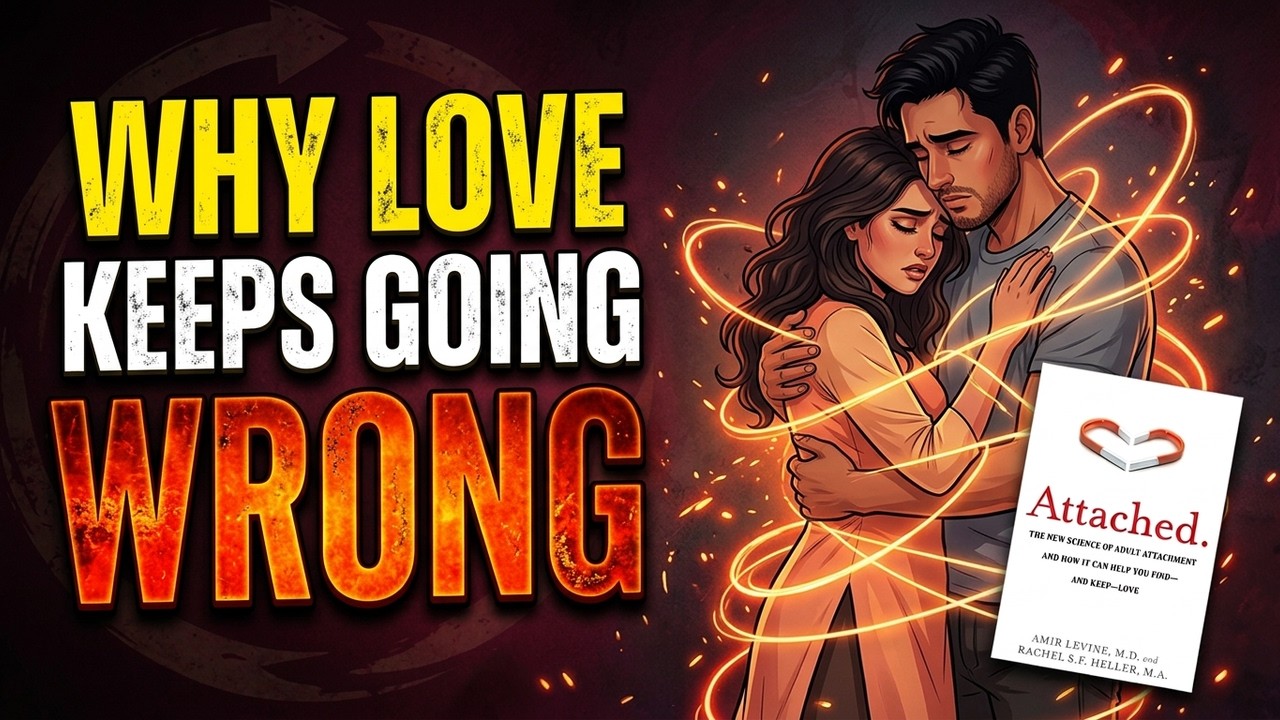
This pairing is common and painful. The anxious partner reaches for closeness. The avoidant partner pulls away from the pressure. Each reaction sets off the other. The more one chases, the more the other withdraws.
The cycle can feel like passion because the highs and lows are so strong. But the authors say it is two attachment systems in conflict. Intensity is not the same as love.
This does not mean such couples are doomed. It means they need awareness and effort. It is also a reason to understand attachment before you choose a partner.
The dependency paradox
Many people think that needing a partner is a weakness. The authors say the opposite is true. When a partner reliably meets your need for safety, you become more confident and more able to do things on your own. A secure base at home lets you take risks elsewhere. A person with a steady partner may find it easier to ask for a promotion or start a business.
Say what you need
The practical path is clear. Learn your own style and your partner’s. Say your real needs clearly and calmly, and do not act them out through protest or distance. When you choose a partner, look for reliability and warmth, not only excitement.
How to use this at work and at home
- Write down your style as honestly as you can: secure, anxious or avoidant. Do it without shame.
- Look at your last two or three relationships. Note where the same pattern showed up.
- If you are anxious, replace a late-night string of messages with one calm sentence, such as, “I miss you and would like to talk tomorrow.”
- If you are avoidant, tell your partner when you need space and when you will return, so they do not guess.
- Notice who answers your needs steadily. Give that more weight than a strong spark.
Our take
The strongest part of this book is that it gives clear words for painful patterns. The three styles are easy to remember. Many readers say the “protest behaviour” and “deactivating strategies” ideas help them see their own habits. The call to speak needs directly is sound advice in any culture.
There are limits. The styles are simple labels, and real people are more mixed. Some critics say the book sorts people too neatly. It focuses on couples and gives less help for people whose partner will not look at the pattern. It also leans on a Western view of dating, and in many families in India, relationships involve more people and different expectations. And a label can be used as an excuse or as a weapon.
Use the ideas as a map and not as a verdict. If a pattern keeps hurting you, a good counsellor can help more than a book.
The animated summary walks through each idea with stories. It takes about 20 minutes.
Who should read Attached?
Anyone dating, married or tired of repeating the same painful relationship pattern, and anyone who wants to understand a partner better.
Watch the full animated summary
Every idea from Attached, told as a story in about 20 minutes.
As an Amazon Associate, we earn from qualifying purchases.